Introduction
When you’re moving to the U.S. on a TN visa, the exciting part is the new job, new city, and new opportunities. The boring part? Figuring out what to do with your car.
It’s one of the most common questions Canadians ask - and while it isn’t glamorous, it’s important. Here’s what you need to know about bringing your vehicle across the border.
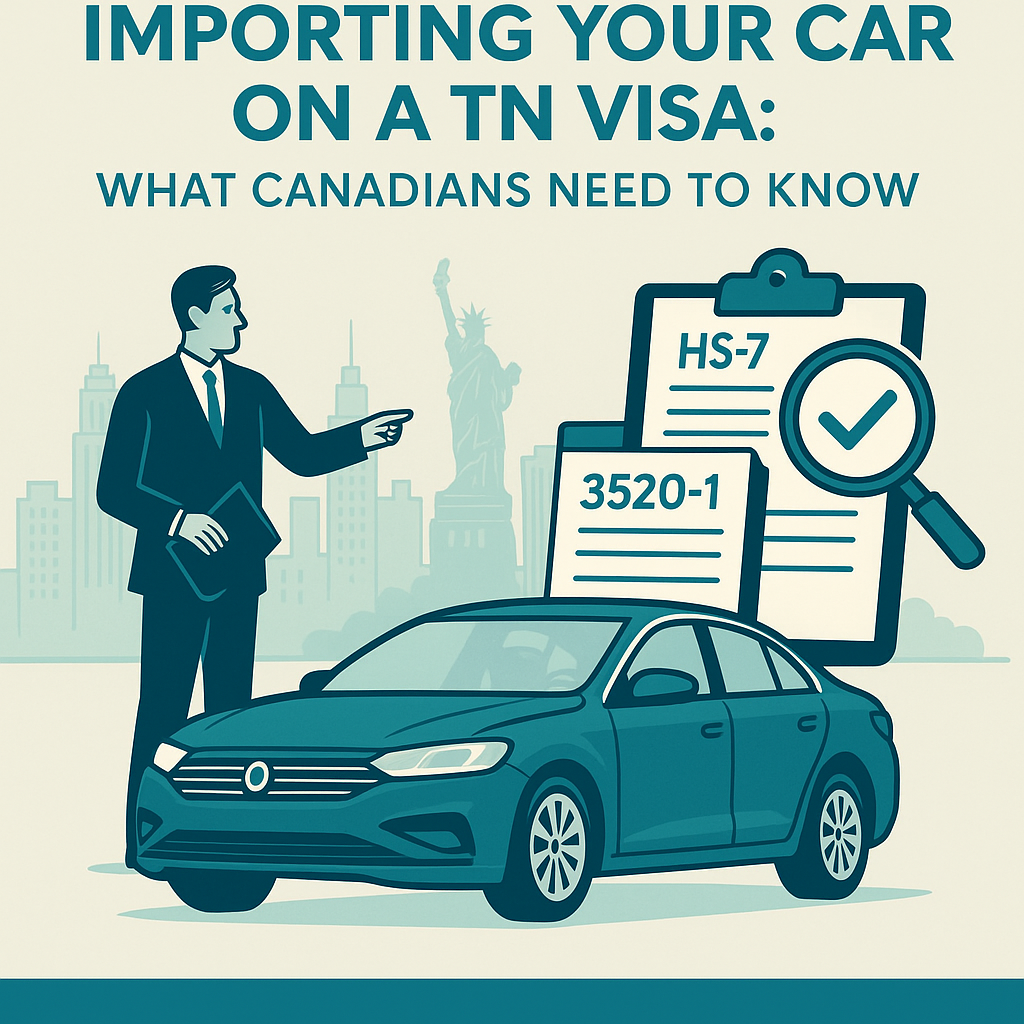
Importing a Canadian car: what to expect at the border and DMV.
Do You Even Need to Import It?
Not every TN worker has to go through the full import process. It depends on your situation:
- Leased vehicles - Usually you can’t export them without written lender permission. Sometimes it’s prohibited.
- Short stays (< 1 year) - It may not be worth importing. Some states allow you to keep Canadian plates temporarily.
- Long-term relocation - Yes, you’ll need to import and register it in the U.S.
Step 1: The U.S. Customs Process
When you cross the border, U.S. Customs and Border Protection (CBP) will treat your car as an import. Here’s what they look for:
- HS-7 form - Declares your car meets U.S. DOT safety standards.
- EPA 3520-1 form - Confirms emissions compliance.
- Ownership proof - Title or registration.
- VIN and odometer check - Officers confirm details match.
- Fees - Usually none for personal-use vehicles.
CBP will stamp your paperwork - keep that stamp. You’ll need it at the DMV later.
Step 2: The State DMV Process
Once you’re in the U.S., the federal process is done. Now it’s up to your state’s DMV:
- Timeline - Most states give you 30-90 days to register.
- Requirements - Title/ownership, CBP import stamp, insurance, emissions or smog test, proof of address.
- Inspection - Some states do a full safety check, others just emissions.
Common Gotchas to Watch Out For
This is where most people get tripped up:
- Daytime Running Lights (DRL) - Canadian cars have them, but the U.S. doesn’t require them. Occasionally confuses state inspections.
- Odometer in Kilometers - Legal, but some states want mileage noted as "km".
- TPMS (Tire Pressure Monitoring System) - Since 2008, U.S. law requires TPMS. Canadian-market cars sometimes don’t have it depending on trim/year. If yours doesn’t, technically it doesn’t meet U.S. safety standards. CBP might wave it through, but your state inspection may flag it. Fix = aftermarket TPMS kits (can be pricey and finicky).
- Insurance - Canadian policies don’t cover permanent residence in the U.S. You’ll need a U.S. policy tied to your new address.
- Leased/Financed Vehicles - Don’t skip lender approval. Without it, CBP can block your export at the border.
Alternatives to Importing
- Sell before you move - Simpler if your car is older or unlikely to pass emissions.
- Buy in the U.S. - Used car markets vary, but it’s often easier (and cheaper) to buy local once you’re settled.
Bottom Line
Importing your car on a TN visa isn’t fun, but it’s doable. Thousands of Canadians do it every year. As long as you show up at the border with the right forms, lender permission if needed, and a well-organized packet, the process is usually smooth.
It’s not glamorous - but it’s one less thing to stress about once you’re settling into your new life in the U.S.
Ready to get started?
Generate a professional TN support letter in minutes.